This guide lists what a smart switch supplier should be able to send you for the European Union, the United Kingdom and the United States, what each document actually proves, and how to check that the paperwork covers your order rather than someone else’s.
Who is legally responsible for compliance
This is the point most first-time importers miss. In the European Union, the manufacturer is responsible for drawing up the technical documentation and the declaration of conformity, but the moment goods are placed on the EU market under your brand, you become the manufacturer in the legal sense – or the importer, if the product keeps the factory’s brand and you only resell it.
Either way the obligation does not stay in China. If a product is found non-compliant, the request for evidence arrives at the company selling it in Europe, not at the factory. That is why the paperwork needs to be verified at the quotation stage: you are the one who will have to produce it.
Start with the destination market, not the product
Compliance is decided by where the goods will be sold, not by what the product does. The same wall switch needs different documents for Germany, for the UK and for the United States. Tell your supplier the destination market before you ask for a quotation, not after.
The four documents you will be asked for
- CE marking — the declaration that a product meets the applicable EU directives. It rests on test evidence; it is not a certificate issued by a government body.
- UKCA marking — the UK equivalent for Great Britain, administered separately from CE.
- FCC — the United States requirement for anything that transmits or emits radio frequency, which includes Wi-Fi and Zigbee modules.
- RoHS — the restriction on hazardous substances in electrical equipment, applied in the EU and mirrored in many other markets.
CE is not a single certificate
For a mains-powered smart switch, CE normally rests on at least three pieces of evidence: the Low Voltage Directive for electrical safety, the EMC Directive for electromagnetic compatibility, and the Radio Equipment Directive because the product contains a transmitter.
Ask for all three. A supplier who sends one page headed “CE certificate” is usually sending a RoHS report with a CE logo on it, which is not the same thing. The European Commission publishes what CE marking does and does not mean, and it is worth reading once before you rely on any certificate.
The Radio Equipment Directive deserves separate attention because it is the one that catches switches. It applies to any product that intentionally transmits or receives radio waves, it sets requirements on the radio spectrum, and it also added cybersecurity-related requirements that radio equipment manufacturers have to address in their documentation.
What a correct declaration of conformity contains
A declaration of conformity is a legal document, so it has a fixed shape. If any of the following is missing, the document is not doing its job:
- The legal name and full address of the manufacturer, and of the EU importer or authorised representative where one is appointed.
- The product identification, including the model number exactly as printed on the product and the carton.
- The directives and the harmonised standards the product is declared against, with their published dates.
- The place and date of issue, and the name and function of the person signing on behalf of the manufacturer.
The harmonised standards are the part to check closely. A declaration that cites the right directives but the wrong standard family tells you the document was assembled from a template rather than from a test file.
Test reports versus declarations of conformity
A test report is produced by a laboratory and shows measured results for a specific sample. A declaration of conformity is a signed statement by the manufacturer that the product meets the relevant directives. They serve different purposes and one does not replace the other.
Customs officers and marketplace compliance teams want both, and they want them to reference the same model number that appears on your carton. When a marketplace suspends a listing, the usual cause is not a failed product but a model number that does not match.
Great Britain and the United States
Great Britain. The UKCA marking regime runs separately from CE. The UK government publishes the current rules on using the UKCA marking, including which products and which deadlines the marking applies to, and the position on accepting CE marking in Great Britain has changed more than once. Confirm the status for your specific product category before printing packaging.
United States. Radio products fall under FCC equipment authorisation. The route depends on whether the device transmits intentionally and how it is built: some devices are self-declared by the manufacturer, while intentional radiators such as Wi-Fi and Zigbee modules normally require testing at an accredited laboratory and an FCC ID. A supplier who cannot tell you the FCC ID for the module inside the switch has not finished the paperwork.
Beyond safety: RoHS, WEEE and packaging
Electrical goods carry obligations that sit alongside product safety and are easy to forget until a buyer or a marketplace asks for them. In the EU, RoHS restricts the use of certain hazardous substances in electrical and electronic equipment, and the WEEE directive governs what happens to the product at the end of its life, including the crossed-out wheeled bin marking and registration obligations in member states. Packaging and battery rules are separate again and are usually managed by the importer, not the factory.
If you sell through a marketplace, its compliance documentation requirements are often stricter than the legal minimum. Ask for the test reports in the format the marketplace accepts before production starts, not during the listing review.
Three checks that catch most problems
- Does the model number on the certificate match the model number you are buying, including any market-specific suffix?
- Was the certificate issued to the factory that is actually producing your order, or to a trading company in another city?
- Is the report dated after the last change to the electronics, or does it refer to a revision that no longer exists?
If any of the three answers is unclear, pull a sample from the current production batch and have it tested independently. That cost is small compared with a container sitting at port.
Certificates that are not what they look like
- ISO 9001 is not product compliance. It certifies a quality management system, not that any particular product meets a safety or radio standard. It is useful evidence about the factory, not about the goods.
- A “CE certificate” issued by a commercial lab that is not a notified body may still be useful test evidence, but it does not by itself make a product CE compliant. Compliance is a declaration backed by evidence, not a badge.
- A report citing a withdrawn standard. Standards are updated and replaced. A report against a superseded edition may not be accepted, even when the laboratory that issued it is reputable.
- A document that covers a family rather than a model. Family certificates exist and are legitimate, but the certificate has to list the model you are buying. If it does not list it, it does not cover it.
What we provide with every order
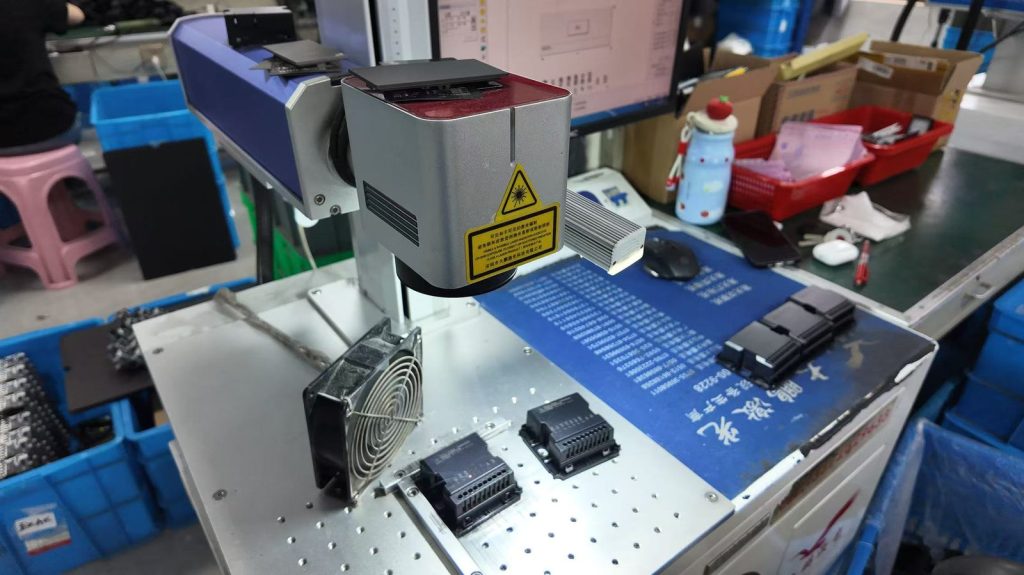
Each order ships with a declaration of conformity and the supporting test reports for the destination market, issued against the model number printed on the carton. Rating plates are laser marked in house, so the marking on the product matches the marking on the paperwork. Our quality control process covers incoming components, in-line inspection and final inspection before packing.

If your market needs a specific test standard, tell us at the enquiry stage and we will confirm it as part of the OEM and ODM service quotation. The wall switch and socket ranges are tested to the same documentation standard regardless of the finish or branding you specify.
Sources
- The European Commission explains CE marking and what it does and does not cover.
- The Radio Equipment Directive page covers the requirements for products containing a transmitter.
- The UK government publishes the current UKCA marking guidance.
- The RoHS directive and the WEEE directive set the substance and end-of-life obligations summarised above.


Leave a Reply